
Custom Tank Builder
Pick your size and options below. The estimate updates as you go. Add the tank to your estimate and submit it; someone in the shop checks it and emails your official quote.
Shape & size
Overall outside dimensionsIdentical tanks built together take less shop time each, so the price per tank comes down.
Material
Alloy & wall thicknessPorts & fittings
Standard fill, vent & first pickup includedQuestions about fittings or options? Call (360) 734-8509 and ask for Marine Sales, or send us a message. We'd rather talk it through than have you guess.
Options & add-ons
Your estimate updates as you chooseNotes for this tank
OptionalWhen your tanks are added, open your Estimate: that's where you fill in your contact details and upload your marked-up sheet, drawings or photos before you submit. Need help? See the measuring guide and drawing examples. For standard shapes the builder draws the tank for you; we mostly need where the ports go.
How it works
Five steps, in order. The builder only asks for what changes the price. Exact fitting sizes, mounting details and baffle layout are settled on the construction drawing.
1Build it and add it to your estimate
Pick your shape, enter the overall outside dimensions, choose thickness and options, and the price updates live. Add it to your estimate when it looks right. You can add more than one tank.
2Tell us where the ports go
We can't work this out ourselves, so we need it from you. Under the live drawing there's a markup sheet to print, already filled in with your dimensions: mark every fitting on it and take a photo of it. Then open your Estimate (the button at the top of the page), fill in your contact details, and upload the photo under Drawings & photos before you submit. A sketch on plain paper, or photos of your old tank, work too. You can add the tank to your estimate first and do this afterwards.
3Submit it and we check it
Your estimate comes to the tank shop. Someone checks that the tank can be built and that nothing important is missing. If something doesn't add up, we call you. Then we email you an official quote: the checked price, including freight.
4Approve the construction drawing
Accept the official quote and pay the 50% deposit (Net 30 accounts: your usual PO), and we draw the tank and send it to you (within two business days). Check every dimension and fitting location, ask for any changes (they're free at this stage), and confirm. Nothing is cut until you approve the final revision, and the tank gets built to exactly what you approved.
5We build it and ship it
Your approval releases the tank to the shop. The clock starts then, not when you submitted the form. How long it takes depends on the tank: a standard model we've built before moves straight through, and a custom tank takes longer. We'll confirm the schedule with you on the official quote.
Options & details
What comes standard, what you can change, and how to think about the choices in the builder.
Standard on every tank
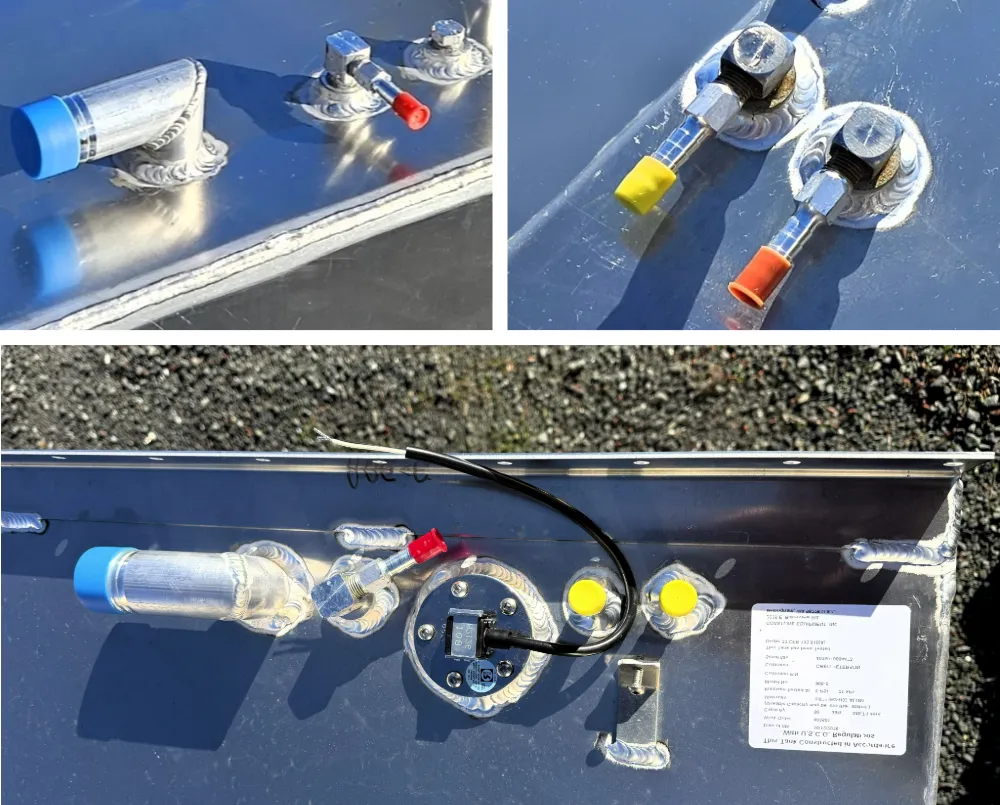
- Pickup tube with 3/8" hose barb (first one included; add more above)
- Vent fitting with 5/8" hose barb (second vent selectable)
- Fill fitting with 1.5" hose barb (2" upgrade selectable)
- Mounting tabs and brackets on request, located on the drawing
- Bonding/grounding tab
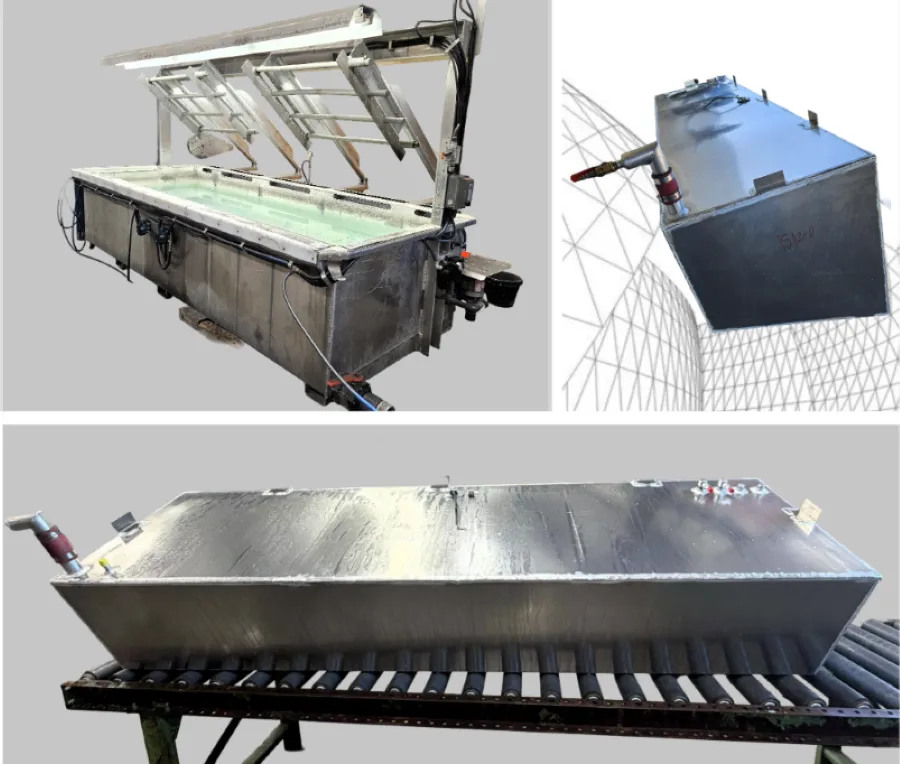
- Coast Guard approved pressure testing and a 29-point inspection
- Internal baffling, sized automatically and included in the price
Fittings we can build
Pickups / returns: 3/8" NPT withdrawal elbow with rigid tube; hose barbs from 1/4" to 3/4". Welded aluminum pickup tubes also available.
Vent: 5/8" barb standard (other sizes available); up to two static vents; EPA vent valves on request.
Fill: 1.5" barbed elbow standard; 2" and other sizes available, with vented or non-vented caps.
NPT bungs (male/female), O-ring bungs, drains, and dipstick ports, as your tank needs.
Sender / level gauge
- Electric KUS sender (240–33 Ω) in a welded 5-hole SAE flange; works with marine gauges and NMEA networks.
- Visual direct-read gauge on the tank top, for tanks 24" deep or less.
- Mounting flange only if you'll fit your own SAE sender (we don't recommend reusing an old one).
- External sight glass: diesel or water only, never gasoline.
- No sender if you don't need one.
Choosing thickness
At minimum, match your old tank. As a guide: under 50 gal, 1/8" is fine and 3/16" is a nice upgrade; 50–200 gal leans 3/16"; over 200 gal or anything wider than ~24", go 3/16" or 1/4".
A wider top stays flatter around welds in thicker material, so water won't pool. Going heavier costs more and trims volume by a percent or two; the estimate shows both as you switch.
Stainless tanks are usually built from lighter sheet, sold by gauge: 14 GA is the thinnest we offer and 10 GA is a little over 1/8".
Choosing material
If you're not sure, choose 5052-H32. It's the standard marine alloy and the right choice for almost every tank.
5086-H116 is stronger but costs more; on a fuel tank we can match its strength with a bit more thickness and baffling, so most builds don't need it.
Stainless steel (304 or 316L) is mostly chosen for water tanks. It takes about twice the shop time of aluminum, so it costs more. 316L resists salt water better than 304.
Counting ports & contents
Pickups: one per engine, plus one per generator. The first is included; count the rest with the pickup stepper. Other ports: returns, drains, and extra threaded fittings. Don't count the fill, vent, or sender; those have their own selections. (One outboard = 1 pickup; twin diesels with returns and a generator might be 3 pickups + 3 returns.)
Contents: gas tanks must have all fittings on or above the top; diesel and water can have fittings anywhere. It also drives the correct labeling.
Gallery
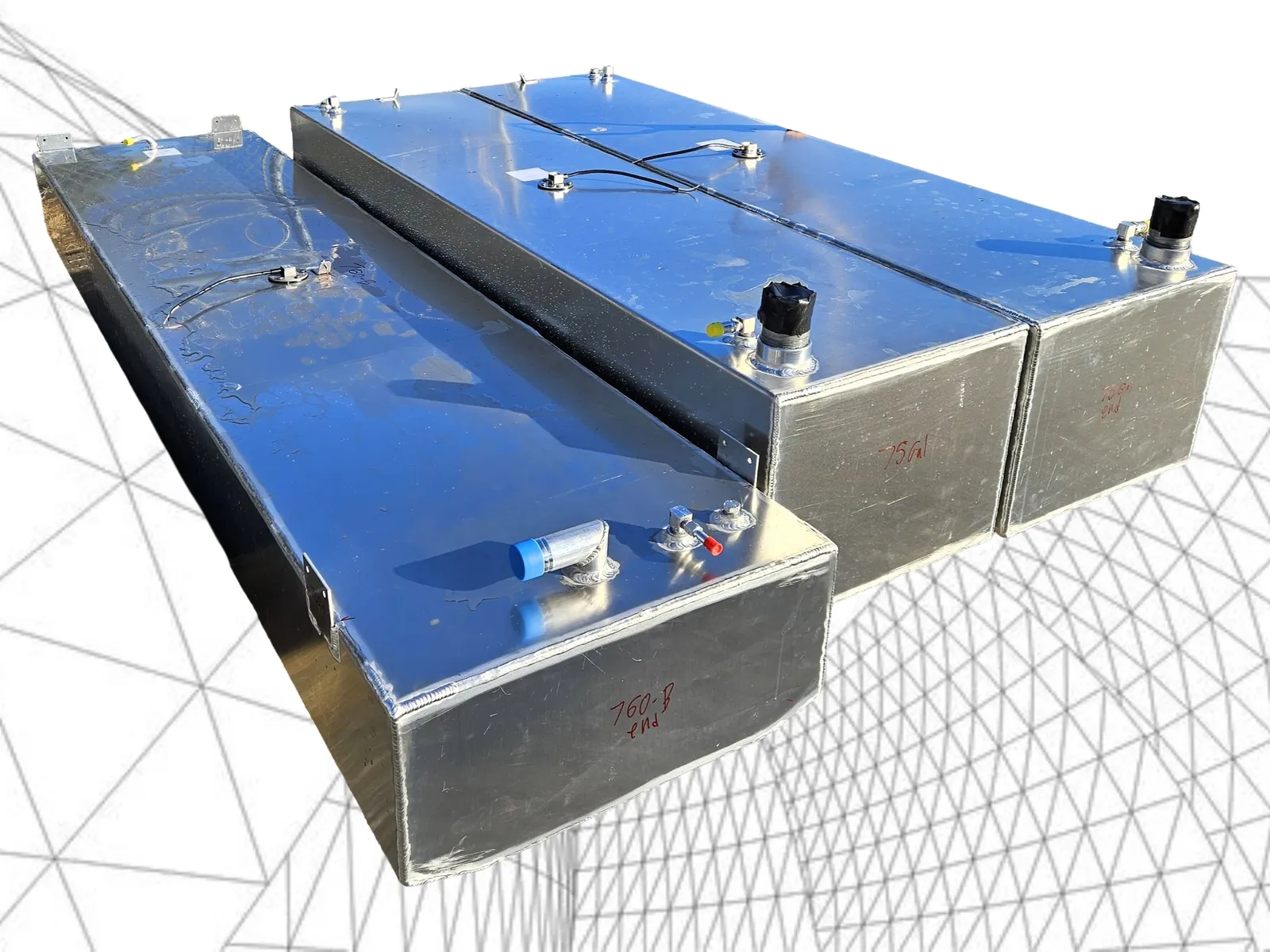
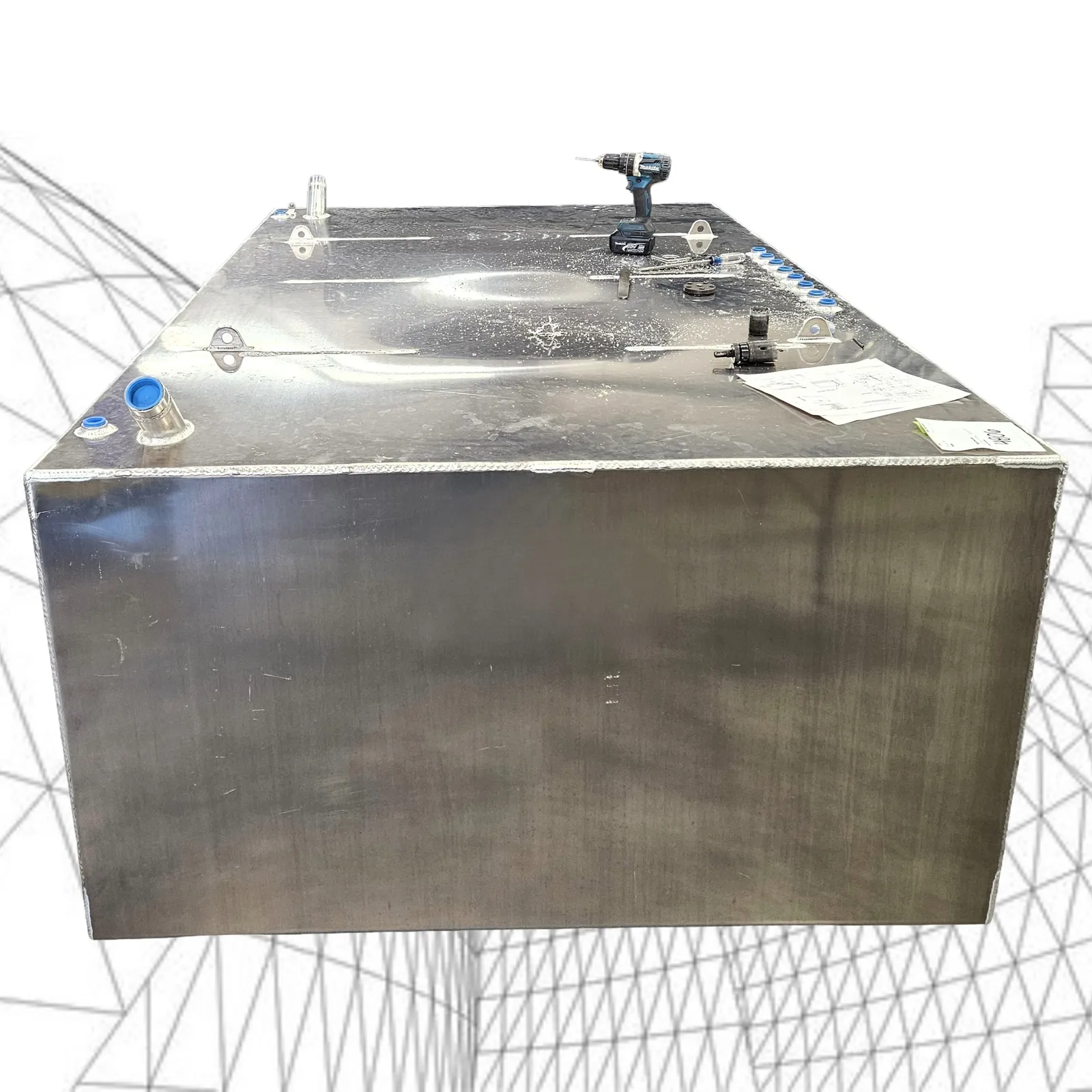
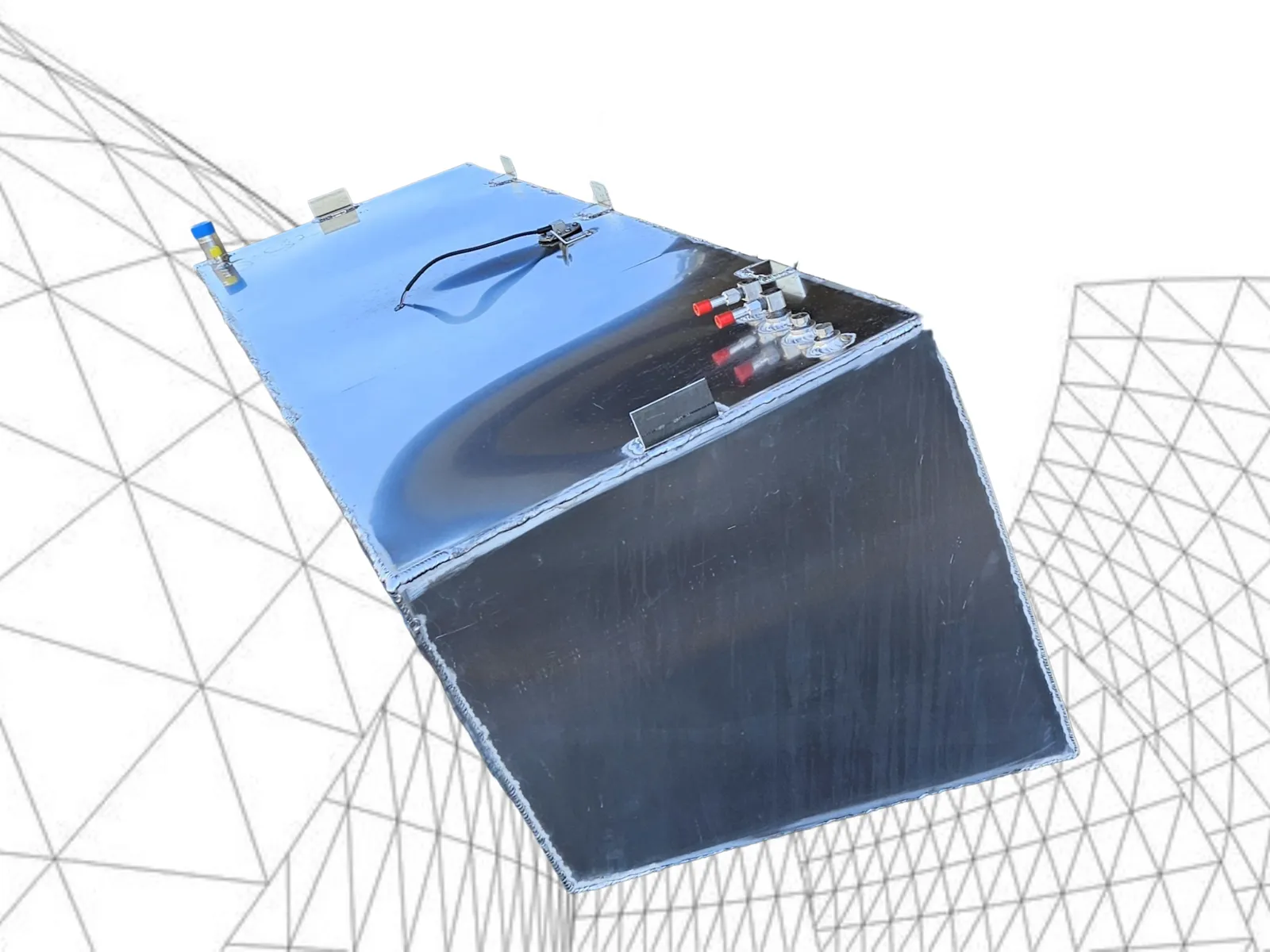
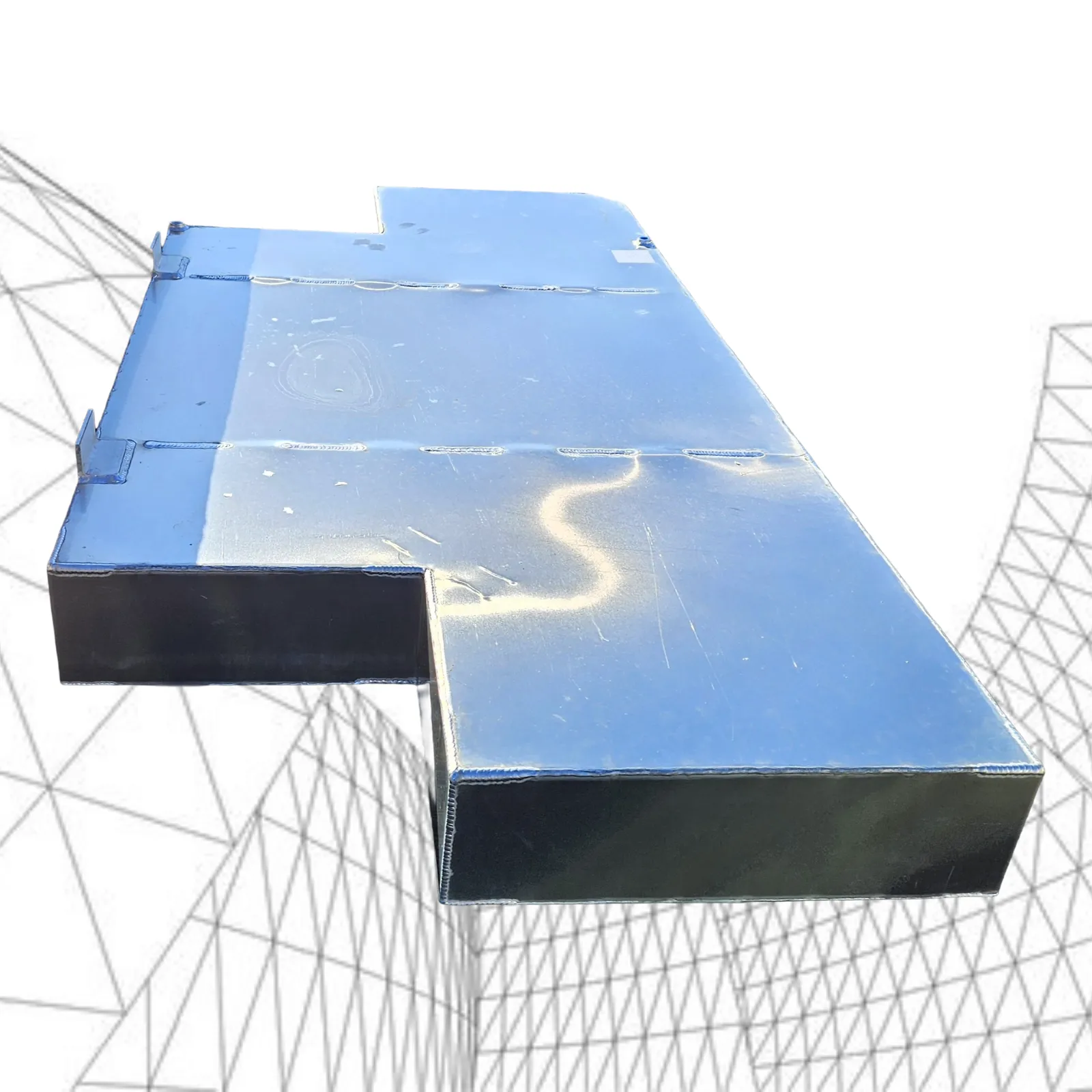
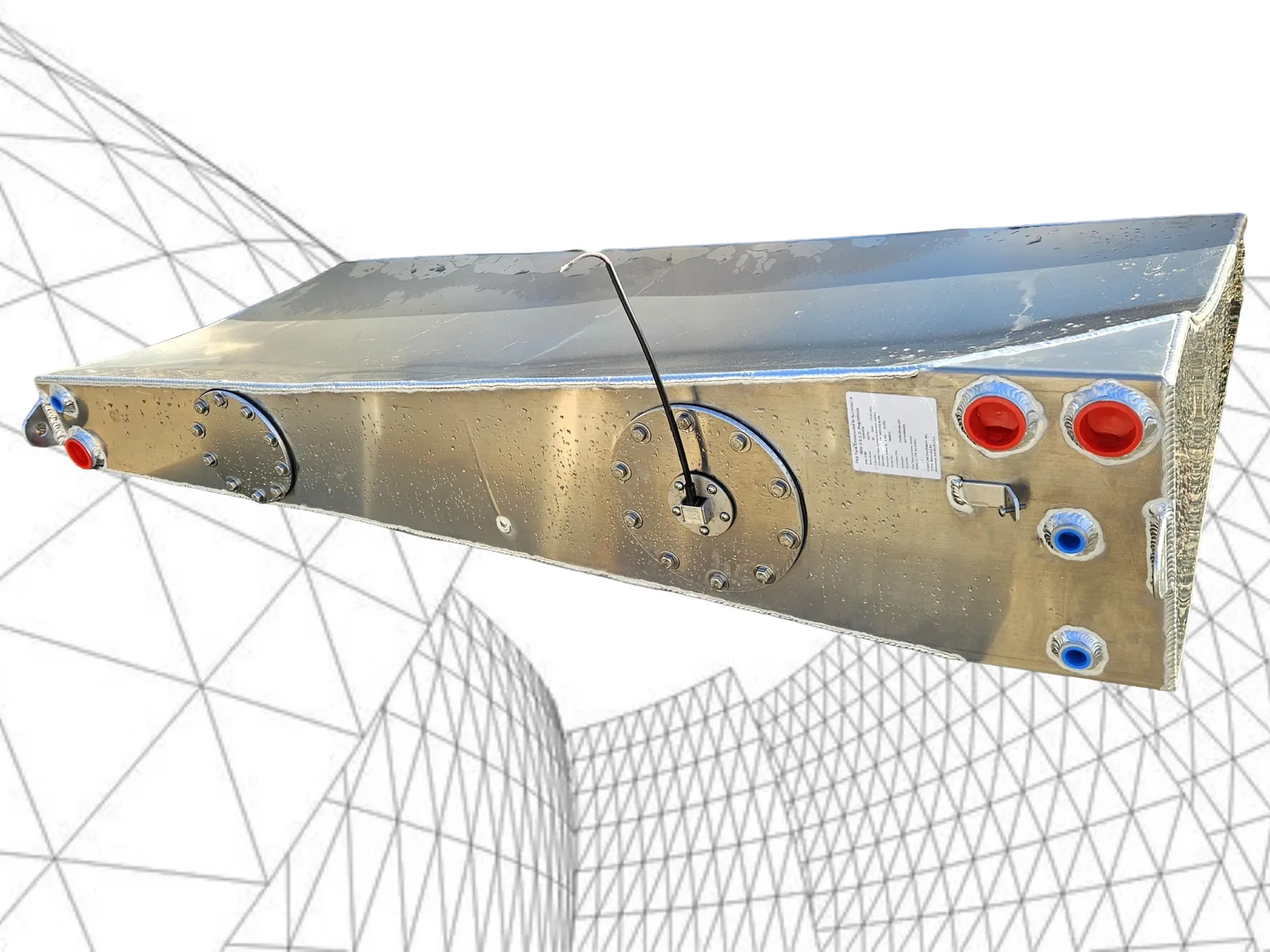
Tanks we've built: shapes, fitting layouts, and finishes.
-
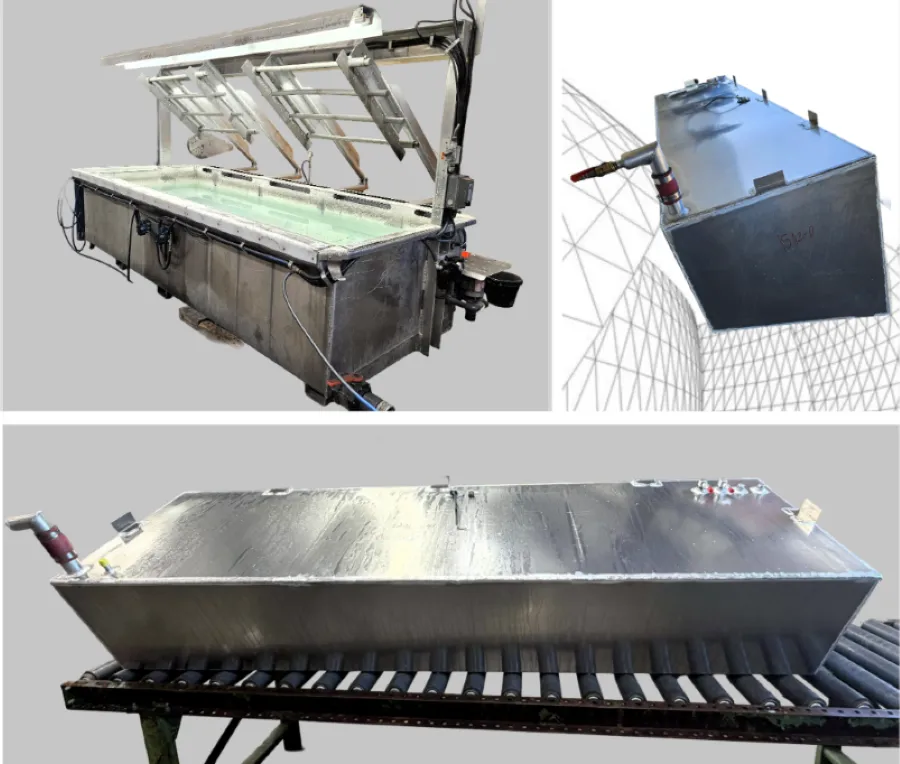
All tanks tested per ABYC requirements -
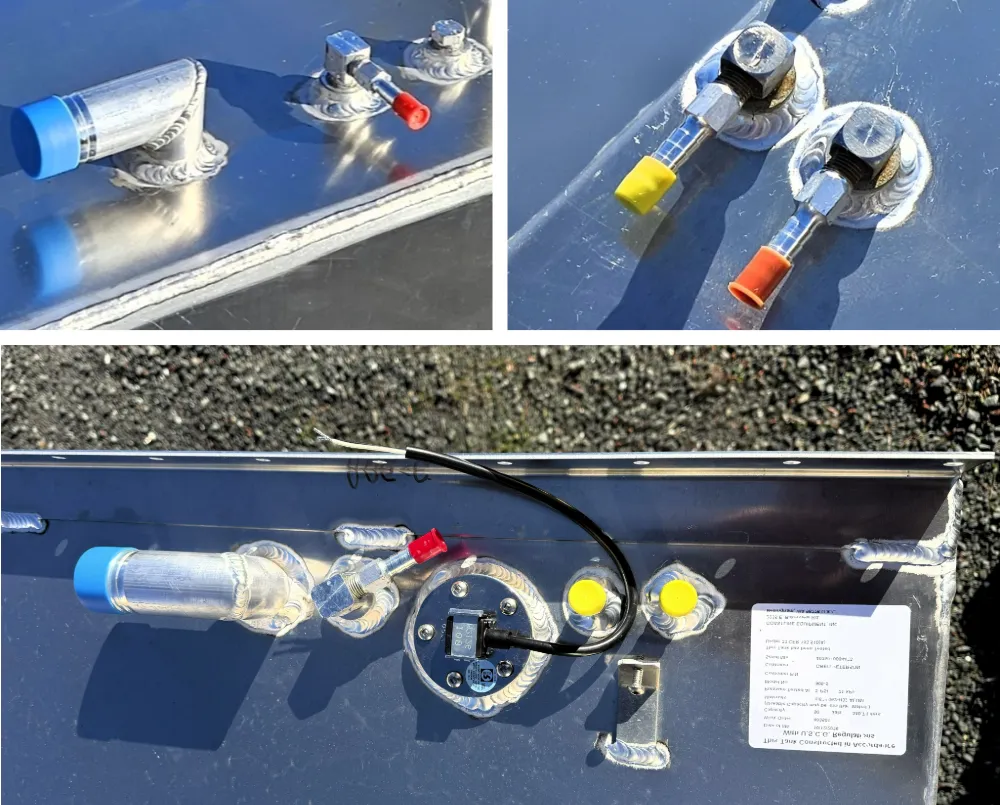
Custom ports and fill per your design -
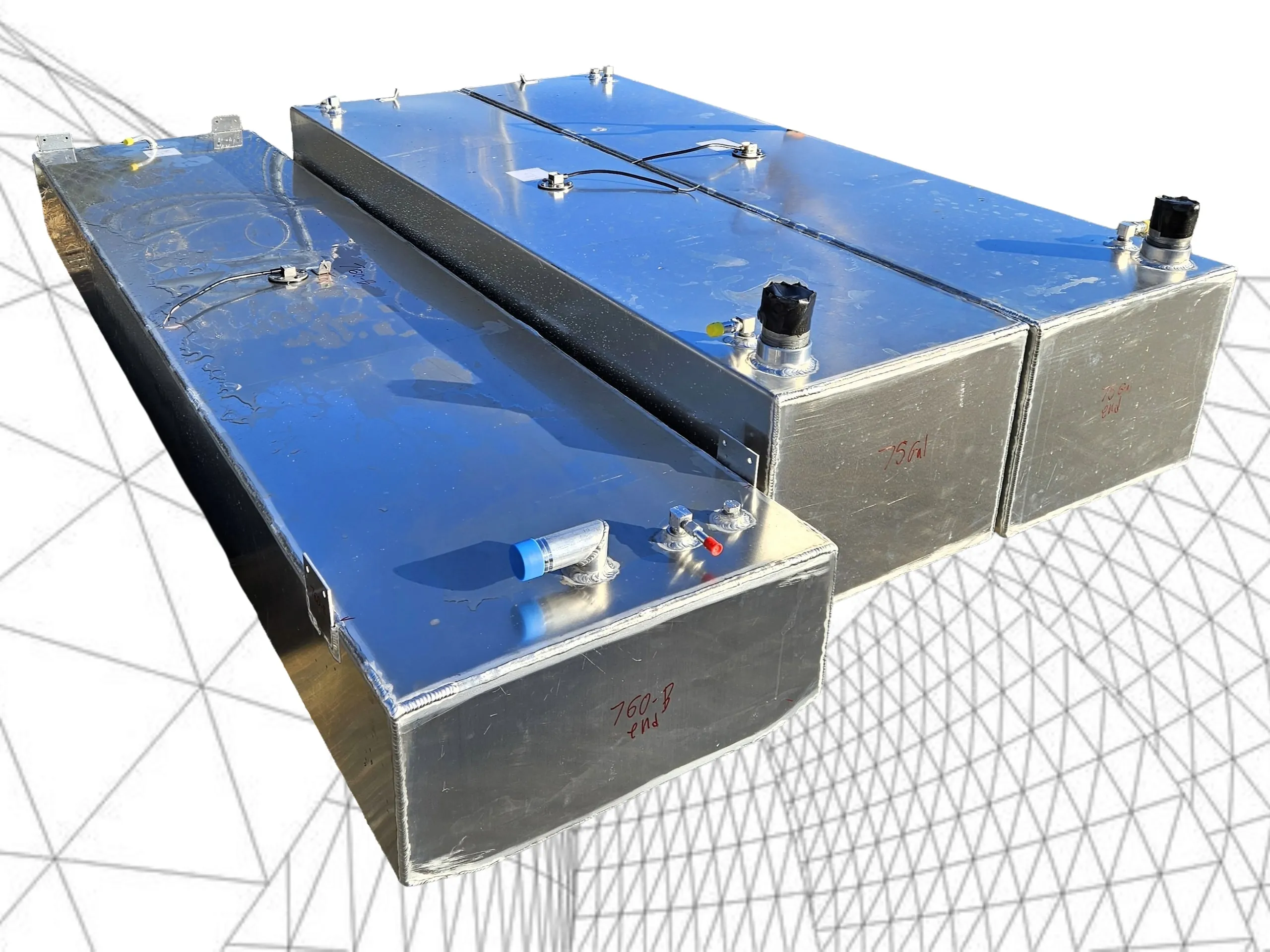
Custom belly and saddle tanks -
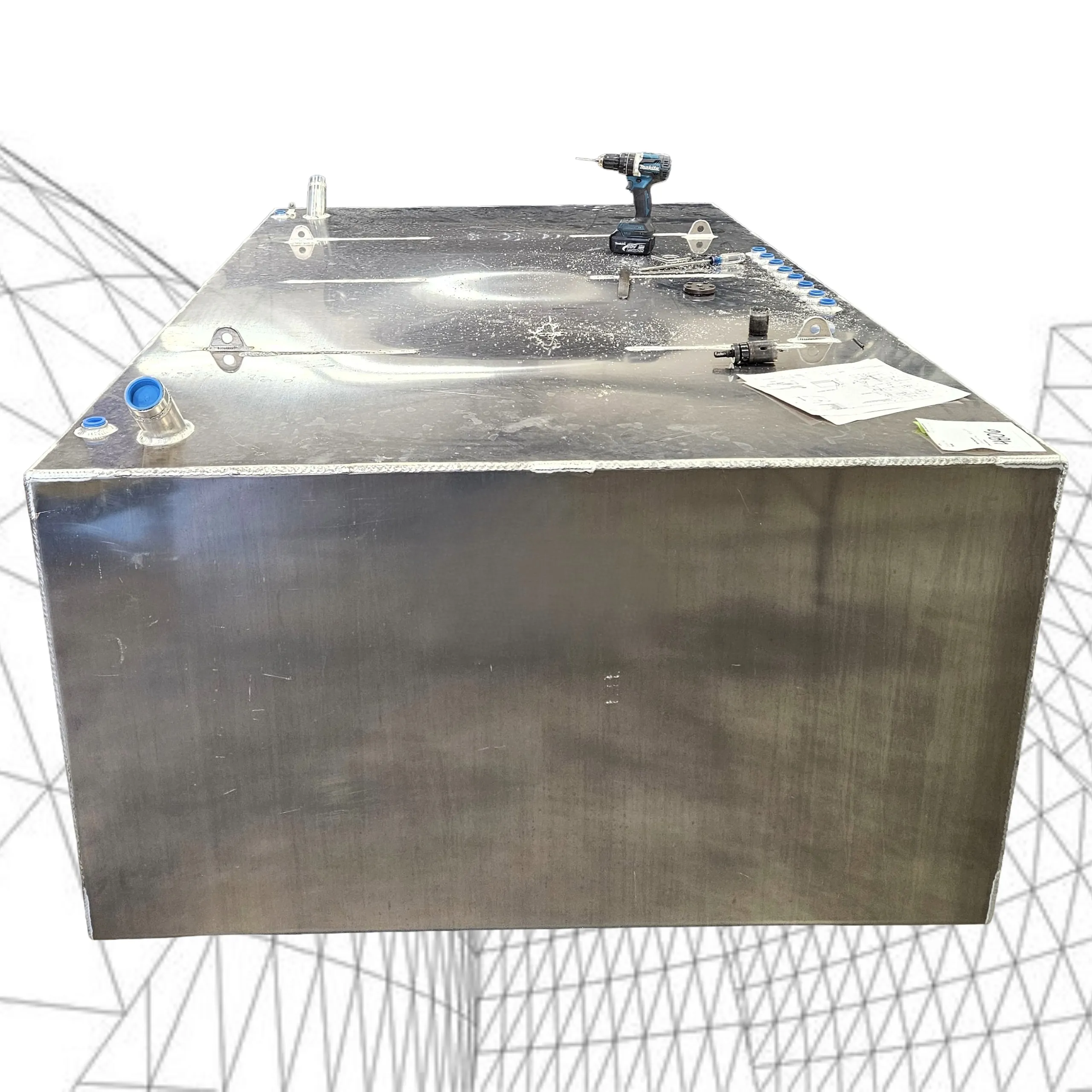
710 gallon belly tank -
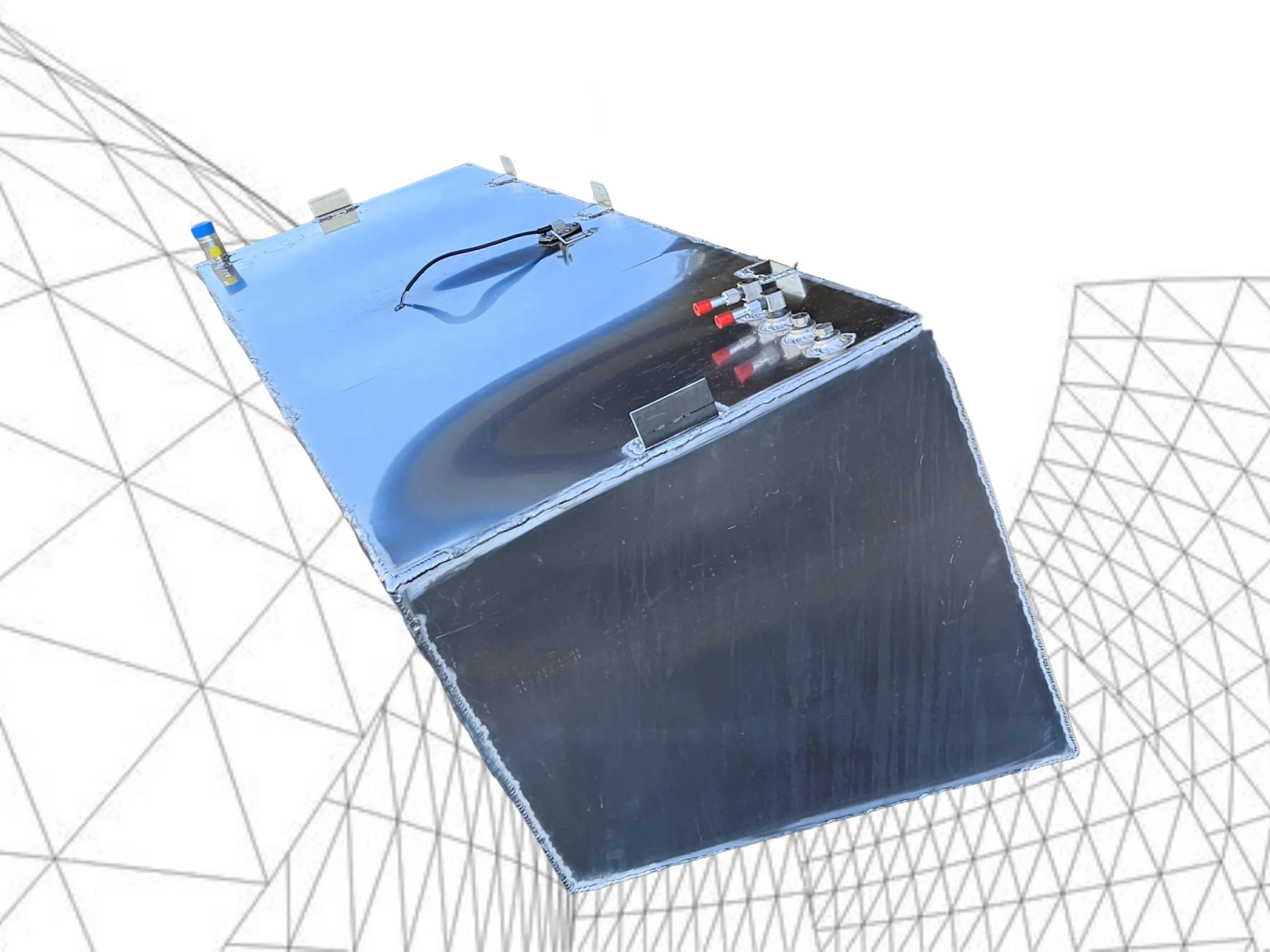
Custom saddle tanks -
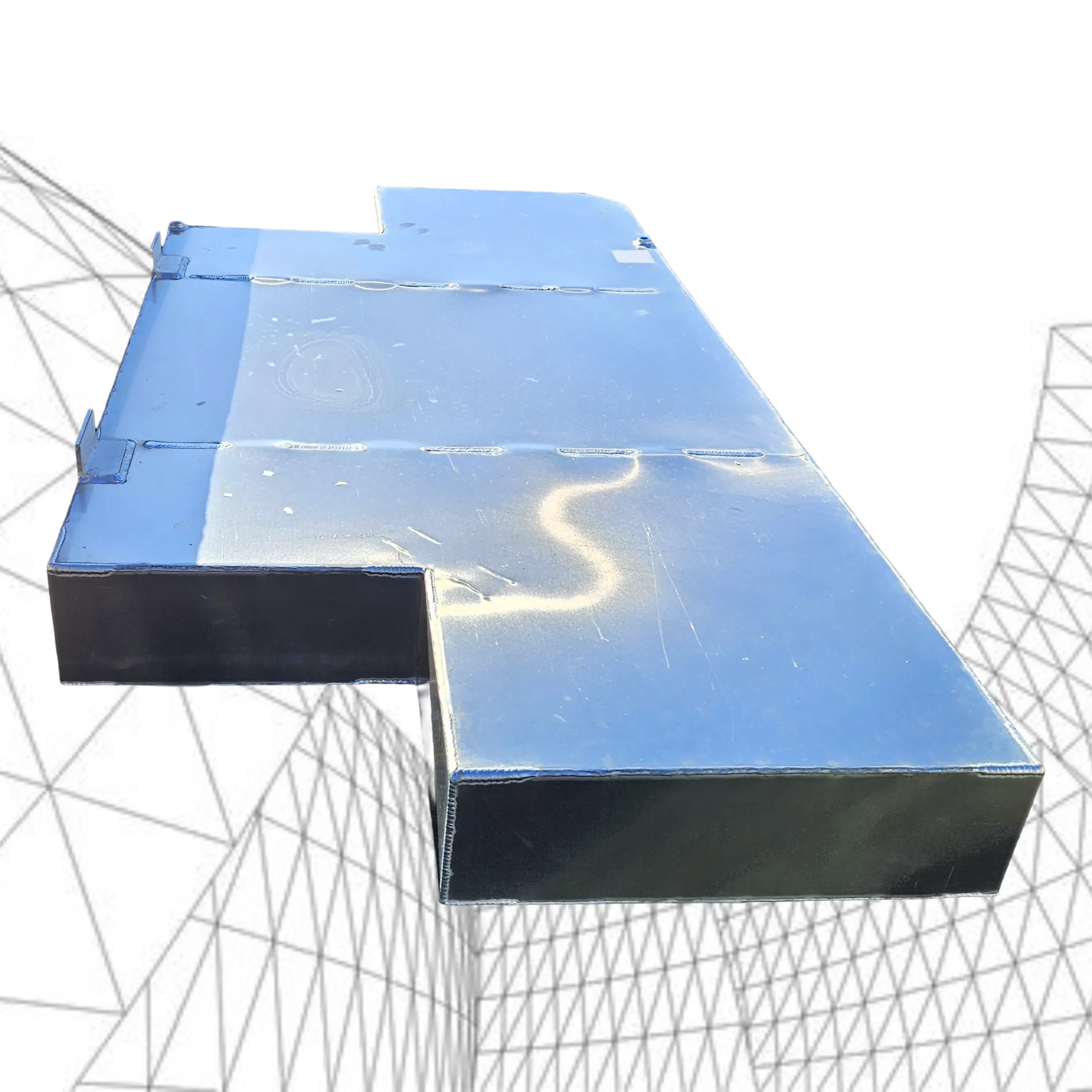
Fully custom designs -
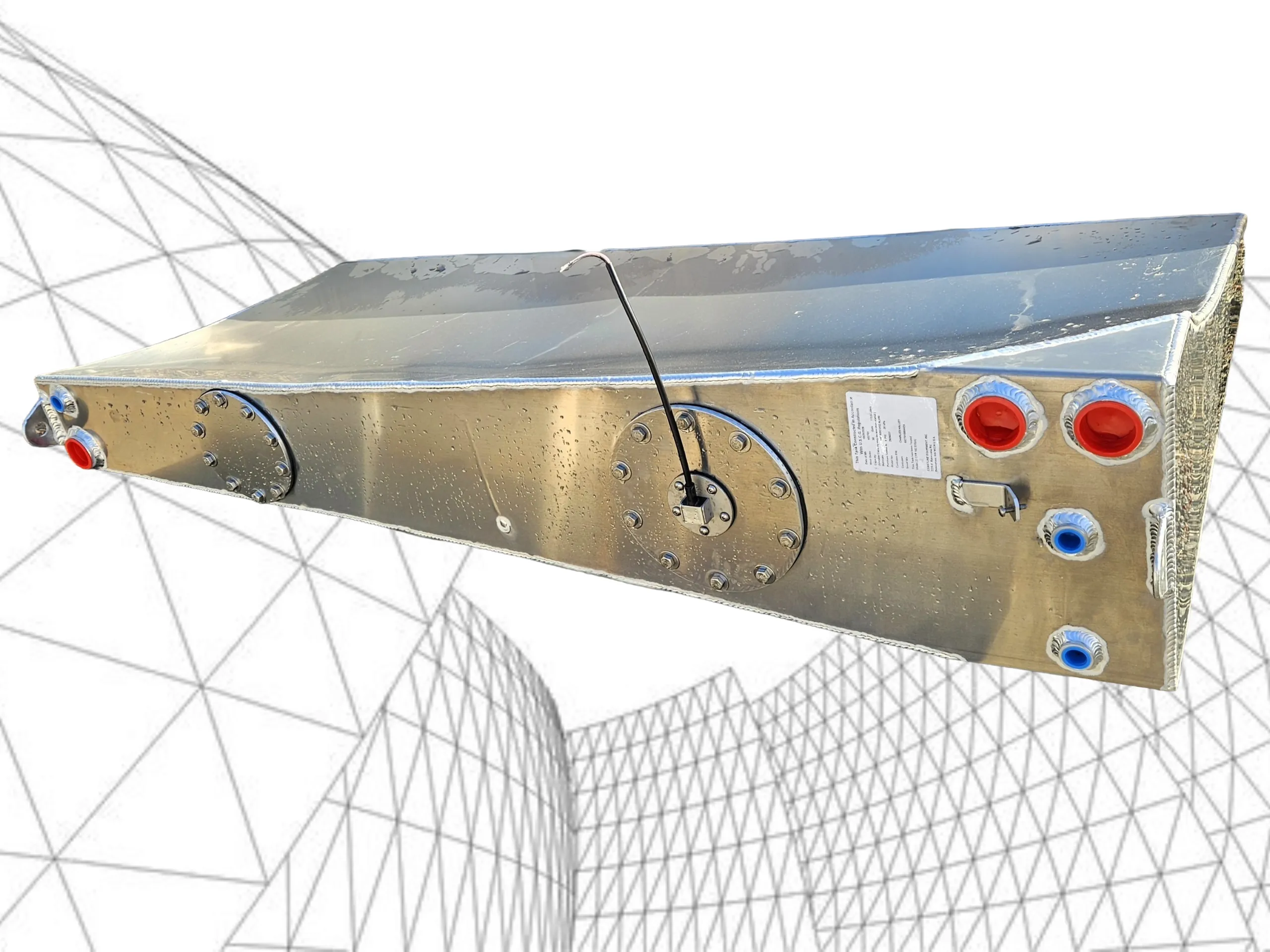
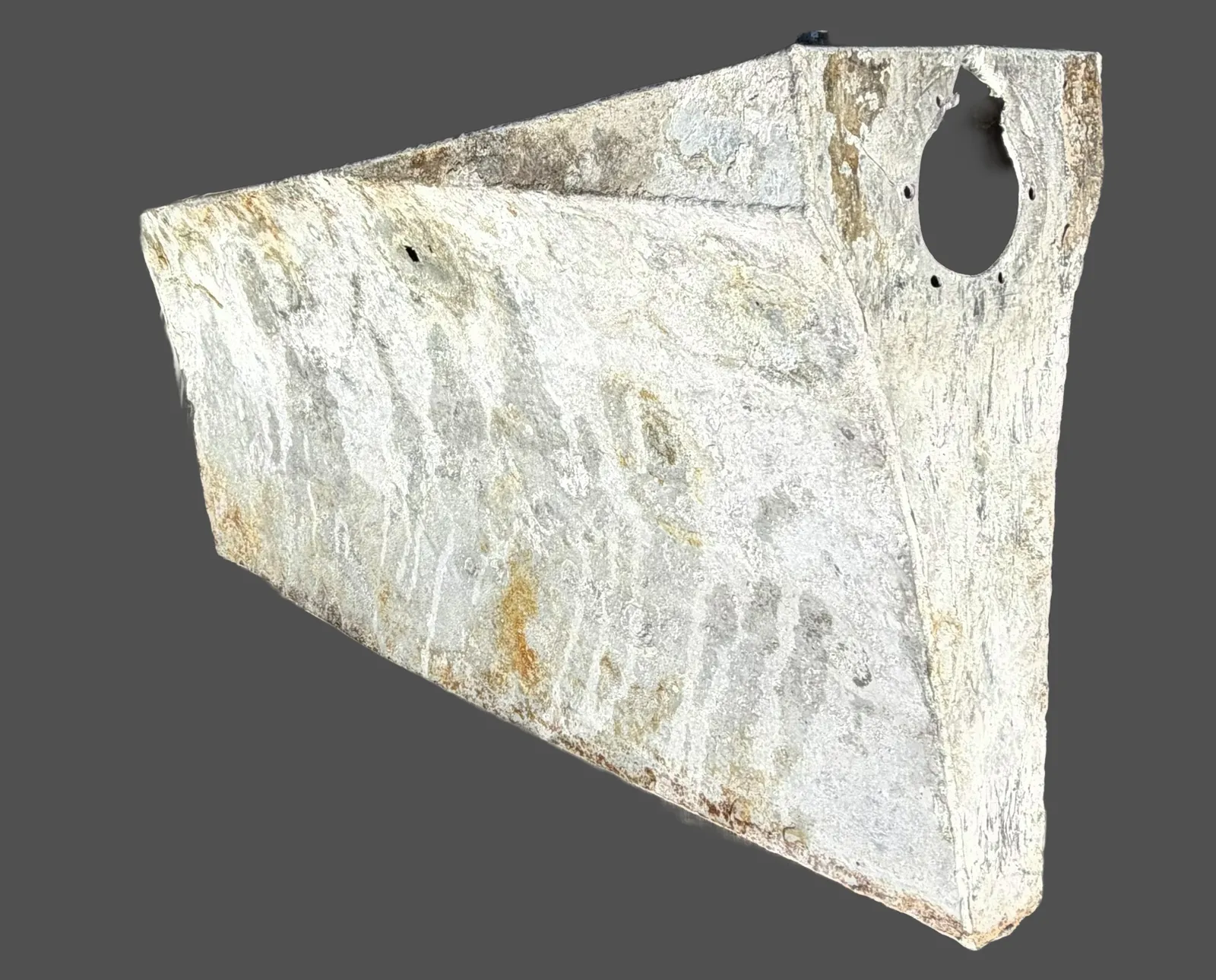
Custom replacement tank from original -
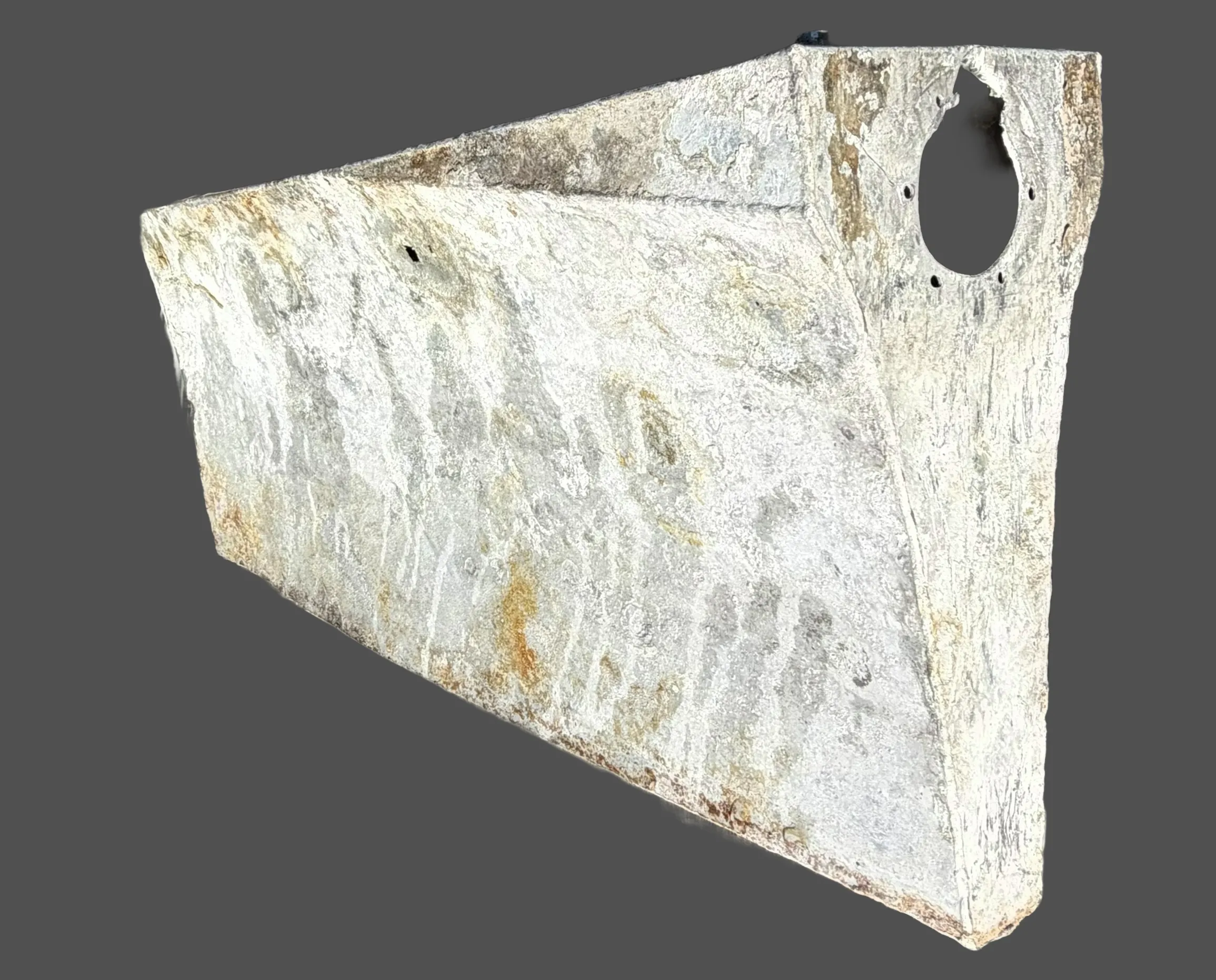
Original tank used as a pattern -
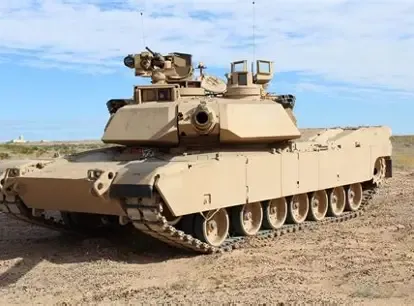
Can't duplicate this one...
Shipping
Freight is priced from your tank's size and weight and your shipping ZIP. Most tanks go LTL freight on a pallet; small tanks can go parcel; local pickup at our Bellingham shop is by appointment. Everything you need to know about shipping →